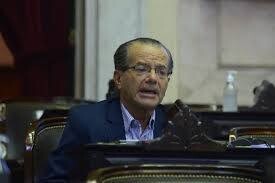
The preparatory session of the Chamber of Deputies, aimed at formalizing the oath-taking of elected lawmakers and renewing authorities, turned this Wednesday into a high-tension spectacle, verbal outbursts, and behavior unbecoming of parliamentary solemnity. Incidents ranged from sexist comments in the official broadcast to shouting matches between new blocs. Inappropriate comments targeting female deputies sparked public condemnation and reignited debates about institutional respect and parliamentary coexistence. What was meant to be a mere procedural formality became a festival of "gems" reflecting the deep polarization and unusual drama the new administration has injected into the legislative body. One of the most embarrassing moments came directly from the official event broadcast. The swearing-in became a turning point for the ruling coalition: La Libertad Avanza (LLA) finally consolidated itself as the parliamentary minority, a fact the Casa Rosada had worked intensively on in recent weeks. The President's presence did not go unnoticed. The provocation immediately sparked a battle of chants and slogans from libertarian deputies in defense of the head of state, demonstrating that respect for the presidential office will be a rare currency in the new Congress. Tension peaked during the left's turn. Their main target was LLA deputy and well-known influencer Lilia Lemoine, who had already had previous run-ins with the left-wing bloc. "Lady, shut your mouth because we are tired of you, Mr. President," Bregman concluded, pointing to his counterpart, who was shouting back from her seat. The dynamics observed during the swearing-in day, where high-voltage discussions overshadowed formality, are a clear sign of the scenario that the new president of the Chamber, Martín Menem, and the ruling coalition's ability to legislate in such a polarized body will face. With a fragmented opposition and a ruling coalition still without its own majority, Milei seeks to show that the axis of his political power is shifting to Congress. One of the central moments of the day was the ratification of Martín Menem as president of the Chamber of Deputies. With a reconfigured Lower House, the Government considers it has room to negotiate on issues, form temporary majorities, and accelerate the approval of initiatives stalled during the year. From the box, Milei followed each segment of the ceremony closely and greeted several ruling bloc lawmakers after the session ended. From the Casa Rosada, they recognize that although they are still far from an absolute majority, the new size of the bloc allows them to approach negotiations from a more favorable position. The swearing-in also left a series of political signals among opposition blocs. At the Casa Rosada, they defined the day as "a very important political signal" and affirmed that the new parliamentary scenario will be decisive for the Executive's reform plan in 2026. The swearing-in of the new deputies thus marks the beginning of a new legislative stage, with greater protagonism for the ruling coalition and a Congress that will have to redefine its balances in an increasingly dynamic and demanding political climate. His appearance was interpreted as an explicit endorsement of the ruling coalition's legislative assembly and as a signal to the new deputies about the centrality the Casa Rosada expects the Parliament to have in the next management stage. In Chaco, Gerardo Cipolini, of the Radical Civic Union (UCR), presided over the ceremony. On at least three occasions, the official broadcast picked up denigrating phrases left on air by the microphone when Cipolini made comments about the appearance of deputies who were just being sworn in: "Rosario Goitia... hey, she's so hot...!", "Hey, how beautiful!" among other expressions. These episodes were recorded in the moments before or immediately after the oaths of lawmakers from different provinces, including representatives from Chaco, Formosa, and San Luis, which generated discomfort among several blocs. Deputy Cecilia Moreau—a member of the opposition bloc—spoke out to condemn the remarks and demand a public apology. In Juntos por el Cambio, now reduced and strained by internal disputes, the swearing-in evidenced a lack of strategic alignment, with lawmakers who support some of the Executive's initiatives on specific points and others who maintain an openly confrontational stance. In parallel, legislative sources confirmed that the ruling coalition will resume talks in the coming days to advance key Executive projects on fiscal, security, state reform, and new legislative delegations. If sanctions or institutional responses are not properly managed, the scandal could complicate alliances and negotiations in the short term. The controversy also serves as an alert to the latent sexism in power spheres, igniting a discussion about the prevailing political culture and the urgent need for symbolic and material sanctions to preserve gender equality and parliamentary respect. Phrases like "How good the wig is" were recorded for posterity, exposing a lack of professionalism and respect that generated immediate condemnations. The debut of the Buenos Aires province deputy María Elena Velázquez (UxP) also raised the temperature in the chamber. The decision, which surprised no bloc, reaffirmed Milei's bet on keeping the Rioja leader at the helm of the body as a key piece for political coordination with the Casa Rosada. In the presence of President Milei, the deputy for Chaco, the ultrakirchnerist Aldo Leiva, broke the silence with a high-impact shout: "Mr. President, the Homeland is not for sale." The international media closely following the Milei phenomenon have highlighted that this type of incident, where political theater surpasses diplomacy, is a distinctive feature of the new ideological era Argentina is experiencing. Traditional Peronism sectors avoided direct confrontation gestures and opted for an institutional stance, while spaces linked to hard Kirchnerism showed greater distance and criticism of the President's presence in the chamber. The deputy for the Left Front, Myriam Bregman, delivered an extensive political oath and took the opportunity at the end to request the intervention of the presidency of the Chamber, with a visibly irritated tone, due to the constant interruptions and shouts from the libertarian bloc. Menem, who had maintained a prudent relationship with different spaces throughout the legislative year, is now in a position to manage a more fragmented Chamber but with a numerically strengthened ruling coalition. La Libertad Avanza managed to become the first minority thanks to a combination of factors: the incorporation of deputies elected by other spaces who migrated to the ruling bloc, the fracture of traditional Kirchnerist sectors, and the disaggregation of Peronism into at least three blocs. "We are head, heart, idea, courage, and perseverance," she affirmed before the full house. Cipolini denied authorship of the comments, alleging that the supposed leak could be due to "technological manipulation" or errors in the audio system. Milei entered Congress amid a major security operation and took his seat in the box alongside the Secretary-General of the Presidency, Karina Milei, and other national officials.